AI video production tools in 2026 explained: Kling, Veo, Runway and Sora compared, features, use cases, and market growth insights.
How Artificial Intelligence Is Transforming the Video Production Workflow in 2026
Video production used to follow a clear order: pre-production, shoot, post-production. Step by step. Linear. Predictable.
In 2026, that structure is much more fluid.
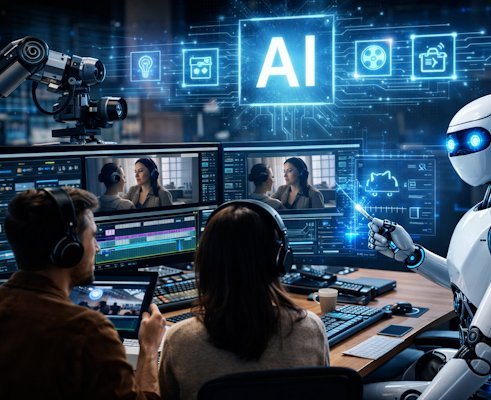
AI hasn’t removed stages it has compressed them. It allows teams to test, adjust, and refine ideas much earlier and much faster. The result? Less friction, fewer surprises, and more creative flexibility.
Let’s break it down.
The Traditional Model: Why It Was So Heavy
Classic production workflows came with built-in constraints:
- High upfront costs
- Long feedback loops
- Limited room for experimentation
- Large teams required for scale
If a concept didn’t work, you often found out after the budget was already spent.
AI changes that dynamic.
AI in Pre-Production: A Real Creative Sandbox
Pre-production in 2026 feels different.
Instead of imagining how something might look, teams can now generate rough cinematic previews within minutes.
You can test:
- Different lighting moods
- Camera movements
- Environment styles
- Character variations
- Tone shifts
Before booking a location or hiring a crew, creative direction can be pressure-tested visually.
This reduces risk significantly. And more importantly, it encourages bolder ideas because iteration is cheap.
AI During Production: Expanding What’s Possible
Production itself is becoming hybrid.
Instead of shooting everything physically, teams often combine:
- Live actors
- AI-generated environments
- Synthetic B-roll
- Digital product shots
Generative platforms like Kling 3.0 or Google Veo 3.1 can create supplemental sequences that would otherwise require complex setups.
This doesn’t replace filming. It expands what a small team can realistically produce.
AI in Post-Production: Where the Time Savings Really Show
Post-production is where AI impact becomes very tangible.
Repetitive tasks that once took hours are now automated.
Adobe Premiere Pro
With AI-powered tools like Sensei, editors get automatic scene detection, filler-word removal, and smart sequencing suggestions.
Descript
You edit video by editing text. Remove a sentence from the transcript, and it disappears from the video.
Runway
Object removal, background adjustments, motion tracking, generative extend all inside one ecosystem.
CapCut
Fast captions, background cleanup, and quick formatting for social platforms.
Individually, these features may seem incremental. Together, they can reduce weeks of timeline work into days — sometimes hours.
The Real Efficiency Gains
When people talk about 70–90% cost reduction, it usually applies to specific use cases: training videos, internal communication, marketing variations, localized ads.
Time savings can be even more dramatic, especially in:
- Captioning
- Rough cuts
- Versioning
- Localization
What AI really removes is mechanical workload. That gives creative teams more time for refinement instead of repetition.
The New Workflow Is Iterative, Not Linear
In 2026, production looks more like this:
- Generate visual prototypes
- Refine concept
- Shoot only what’s necessary
- Enhance with AI assets
- Automate repetitive edits
- Finalize strategically
It’s not about skipping craftsmanship. It’s about reallocating effort to where it matters most.
And that shift is structural.